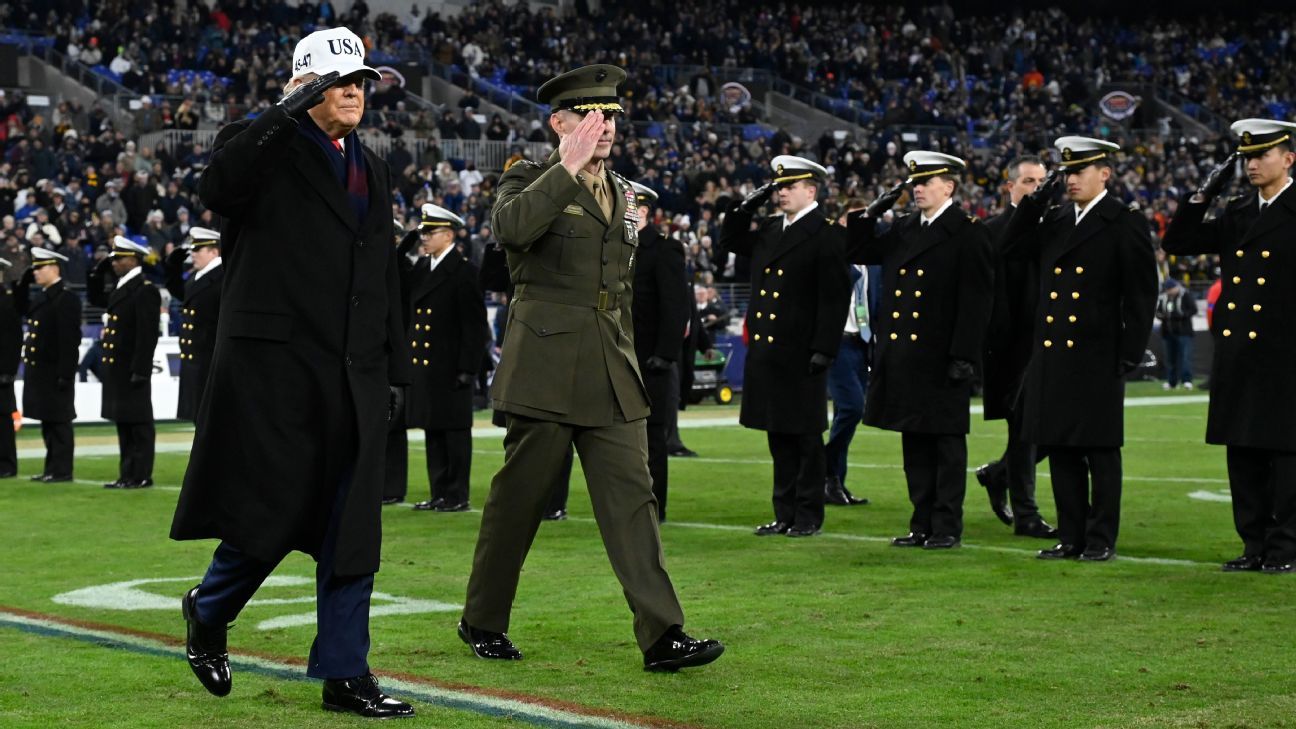
President Donald Trump has issued an executive order aimed at safeguarding the broadcast of the annual Army-Navy football game. The order specifically prohibits the College Football Playoff and other postseason games from being aired during the December Army-Navy matchup, a tradition that draws significant national attention.
The executive order was signed amid concerns over broadcasting rights and the potential for conflicts with other major sporting events. By implementing this measure, the administration seeks to ensure that the Army-Navy game remains accessible to viewers without interference from competing broadcasts.
This move has sparked mixed reactions across the sports community and political spectrum. Supporters argue that it preserves a historic tradition and ensures national focus on the Army-Navy game, which is considered one of the most storied rivalries in college football. Critics, however, contend that it could set a precedent for government intervention in sports broadcasting and raise questions about free enterprise and market competition.
The executive order also emphasizes the importance of honoring military service and maintaining the game's significance as a patriotic event. The Army-Navy game, held annually in December, is renowned for its display of military pride and camaraderie, making its broadcast a matter of national interest.
While the specifics of the executive order's implementation are still being discussed, it marks a notable intervention by the federal government into the realm of sports broadcasting rights. The move underscores the ongoing debate over the balance between tradition, commercial interests, and government influence in American sports culture.
As the December game approaches, broadcasters and sports organizations are closely monitoring the situation to see how the executive order will impact the coverage and scheduling of the event. The decision highlights the complex intersection of sports, politics, and national identity in the United States.